Search is changing. A growing number of people are no longer clicking ten blue links on Google. They are asking ChatGPT, typing into Gemini, or using the AI Overview that now appears at the top of Google results. They get one answer, and they move on.
That one answer belongs to a business. It could be yours.
This is what AEO is about.
What Does AEO Stand For?
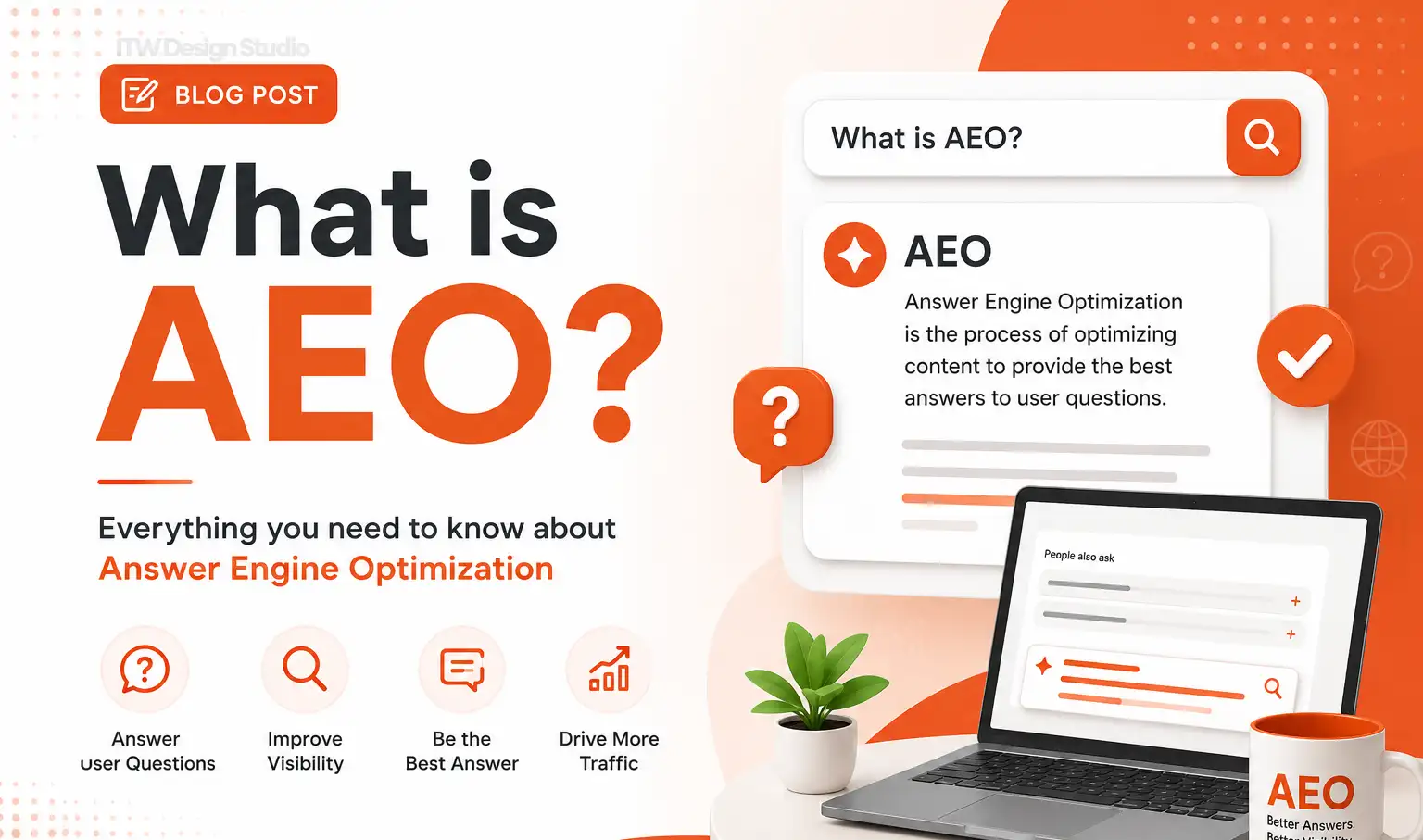
AEO stands for Answer Engine Optimization. It is the practice of structuring your website content so that AI-powered tools, including ChatGPT, Google’s AI Overview, Perplexity, and Bing Copilot, can find, understand, and cite your business when someone asks a relevant question.
Traditional SEO helps you rank on a list of results. AEO helps you become the answer.
How Is AEO Different From SEO?
SEO and AEO work together, but they are not the same thing. SEO focuses on ranking your pages for keywords so that users click through to your website. AEO focuses on making your content easy for AI systems to extract and present as a direct answer, often without the user clicking anything at all.
Both matter. But most small businesses are only doing one of them.
Why Does AEO Matter for Small Businesses in 2026?
When someone asks “Who is the best web design agency for small business?” or “What should I look for in an SEO company?”, AI tools pull from web pages they have indexed and analysed. They look for content that directly answers the question, comes from a credible source, and uses clear, well-structured language.
If your website does not have content written this way, you will not appear in these answers. A competitor who does will. This is not a future problem. It is happening now.
What Does AEO Actually Involve?
1. Question-Based Content
Writing content that directly answers the questions your customers are actually asking. Not keyword stuffing, but genuinely useful, specific answers structured in a way that AI systems can extract clearly.
2. Schema Markup
Adding structured data to your website so that search engines and AI tools can understand what your content is about, who you are, what you offer, and where you operate.
3. Entity Building
Establishing your business as a recognised entity across the web, through your Google Business Profile, consistent NAP data, directory listings, and mentions on credible external sites.
4. E-E-A-T Signals
Demonstrating Experience, Expertise, Authoritativeness, and Trustworthiness across your content. AI models are increasingly selective about what sources they cite, and weak or generic content rarely makes the cut.
5. Conversational Content Structure
Formatting your content with clear headings, concise paragraphs, FAQ sections, and direct definitions that AI can lift and present as answers.
A Simple Example
Say you run a chartered accountancy firm in Pune. A potential client types into ChatGPT: “What documents do I need to file GST returns in India?” If your website has a clear, well-structured article that answers this question directly, you have a chance of being cited. If your website only has a services page and a contact form, you will not appear at all.
AEO is about making sure the right content exists on your site in the first place.
Do You Need Both SEO and AEO?
Yes. They are complementary. SEO still drives traffic for people who want to browse options and compare. AEO captures people who want a direct answer and are more likely to be ready to act. A business that invests in both covers both types of intent.
How Do You Know If Your Website Is AEO-Ready?
Ask yourself these questions:
- Does your website have content that directly answers the questions your customers search for?
- Is your Google Business Profile complete, accurate, and regularly updated?
- Is your business listed consistently across relevant directories?
- Do your pages use proper heading structure and clear, concise language?
- Is there schema markup on your key pages?
If the answer to most of these is no, your website is not AEO-ready and you are likely invisible in AI-generated answers right now.
What to Do Next
AEO is not difficult to implement if you have the right strategy and content in place. For most small businesses, the starting point is an audit of what content you have, what questions your customers are asking, and where the gaps are.
If you want to understand where your business stands, book a free 30-minute strategy call with ITW. We will give you honest feedback with no sales pressure.